
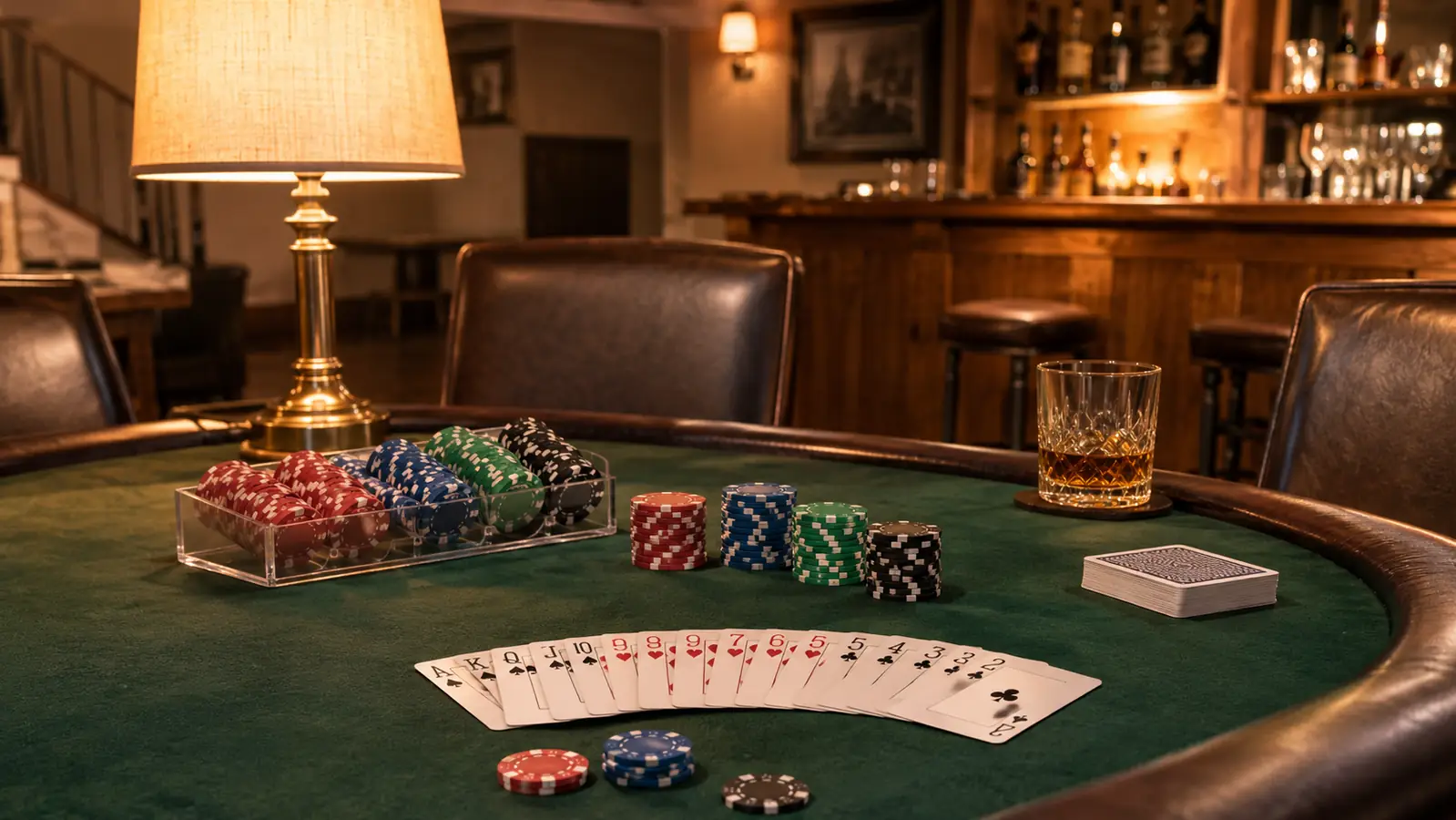
Friday nights at my place start around seven. Six of us around a folding octagon top on an old kitchen table in the basement, chips sorted into trays, and a deck that needs shuffling every hand or two. That has been the routine for nine years. The routine changed five months ago.
Ray is my brother-in-law and he has been in this game since the first night. His hands stiffen up when the weather turns, arthritis in both, and shuffling a full deck of Copag 1546s started taking him a while. Nobody said anything. You don't. But the table went quiet while he worked the cards, and the night lost a beat every hand.
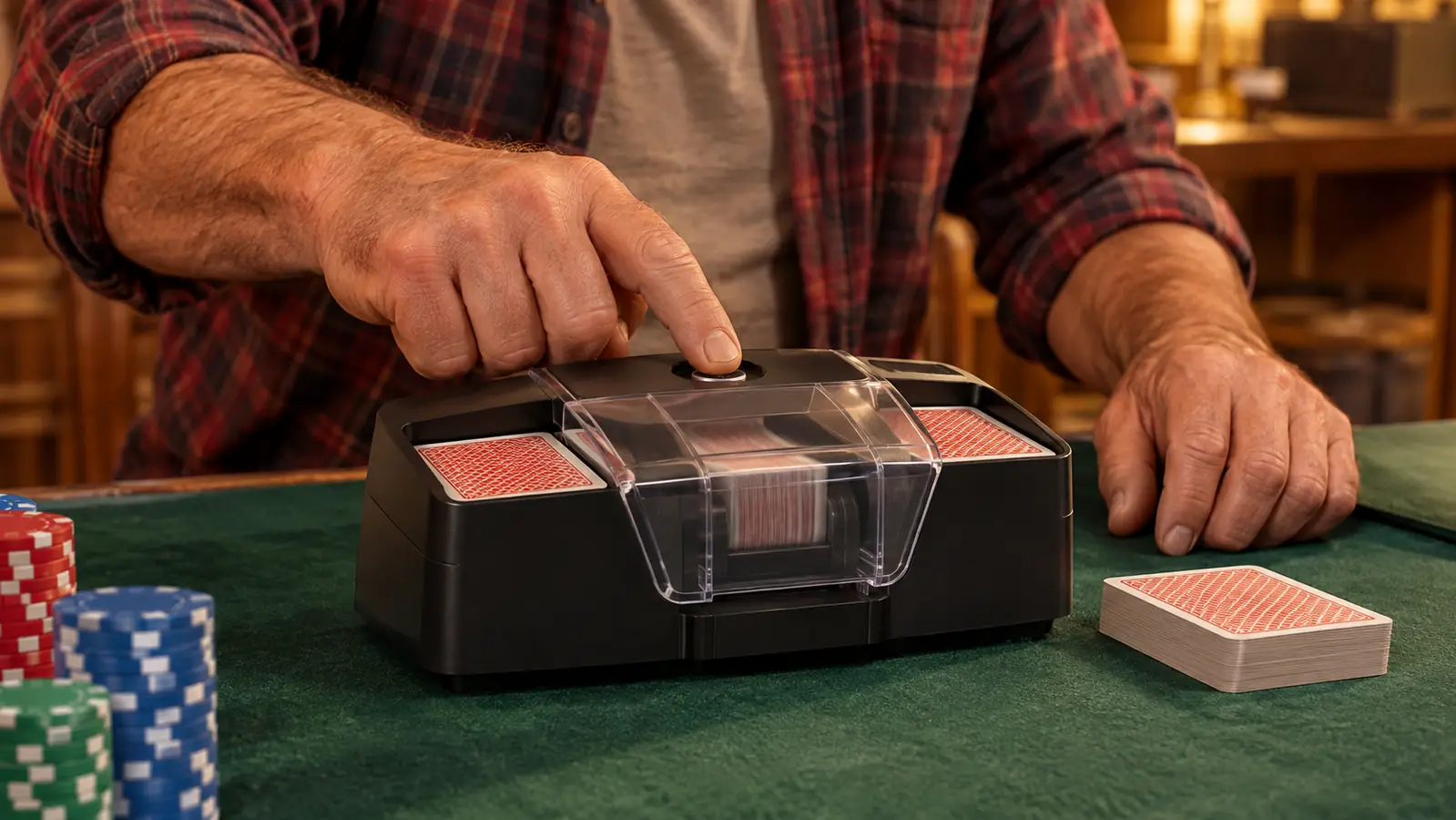
After a couple of hours those beats add up. So five months ago I bought a KPAW automatic card shuffler and set it next to the dealer's spot. It handles one or two decks, it runs on a battery so there is no cord across the felt, and it weighs eleven ounces, which means it gets shoved aside when the pizza shows up and shoved back when the plate leaves.
Here is the part I did not expect. The machine is quiet. Not silent, quiet. You can hear the guy across from you finish a story while it runs, and in a basement with a wood bar and hard walls that matters more than any spec sheet suggests. A loud machine at a poker table is worse than slow shuffling, because it makes people stop talking, and the talking is half of why we are down there.
One press and it goes. There is a manual mode as well, which I use when the deck is new and slick and I want to feed it a little slower. Five months of Friday nights is a few hundred shuffles, and the only trouble I have had has been my own: if you shove a deck in crooked, it lets you know by not doing its job. Square the cards up first and it is fine.
Ray deals now. He sits with the cards, pushes the button, and keeps talking, and the table keeps moving. Tom still shuffles by hand some nights because he says he likes the feel of it, and that is fine too. Nobody is required to use the machine. It is just there, and the night runs easier for it.
The machine does not make the game better. It makes the game stop stopping.
Five months of Fridays and it still has not left the table
One press, one or two decks, quiet enough to talk over. If the dealing end of your game is the slow end, this is the smallest fix we have made to the room.
Amazon Check Today's Price on Amazon →We keep two Copag double-deck sets in rotation, red and blue, and the shuffler handles either. Most nights I feed it one deck at a time. On the rare occasion we get seven or eight people and want to move faster, it takes two, and that has been handy. The oldest set of Copags has been washed with dish soap and is still in play. The machine has not complained about any of them.

What I do not love: it takes up a spot on the table. Not a big spot, but the octagon top is 48 inches and seats eight, and every inch counts once the chip trays come out. I also would not call it a replacement for a good hand shuffle if you are the sort of player who enjoys that part of the game. It is a convenience, not a ritual. If you love shuffling, do not buy it. Nobody needs a machine to do a thing they already like doing.
Five months in, the battery has been a non-event. The KPAW came with one, and I have swapped it once. It lives beside the dealer's spot during play and goes back on the shelf behind the bar with the chip trays between games, and it has taken a couple of knocks without any drama. Eleven ounces is about right for this: heavy enough to stay put when you press it, light enough that it does not feel like furniture.
I have upgraded this basement piece by piece over nine years, and the pattern never changes. The Fat Cat clay set replaced plastic chips that stuck together. The folding octagon top replaced bare table. The Brybelly trays replaced piles. None of that made anybody a better player. What it did was take out the small friction that makes a night feel like work. The KPAW shuffler is the same kind of purchase, and it may be the one the guys notice least.
If your game has a Ray in it, somebody whose hands are slowing down, this is the piece to buy first. If you host and you are the one shuffling every hand while everybody else talks, same answer. If you play heads-up once a month with one deck and no particular rush, you do not need it. That is an honest read on five months at the table, not a pitch.
What I'd Tell You If We Were Sitting at My Kitchen Table
I would tell you the same thing I told Ray when he asked whether it was worth it. The machine does not make the game better. It makes the game stop stopping. You still get bad beats and you still get a guy who takes four minutes to fold, but you no longer get the silence of six people waiting on a shuffle. If that sounds like a small thing, you have not hosted a game for nine years. Small things are the whole job.
If there is a Ray at your table, this is the one to buy first
Handles one or two decks, runs quiet, takes a battery instead of a cord. Read the listing, check today's price, and let your dealer keep his hands free for the cards he wants to hold.
Amazon Check Today's Price on Amazon →