
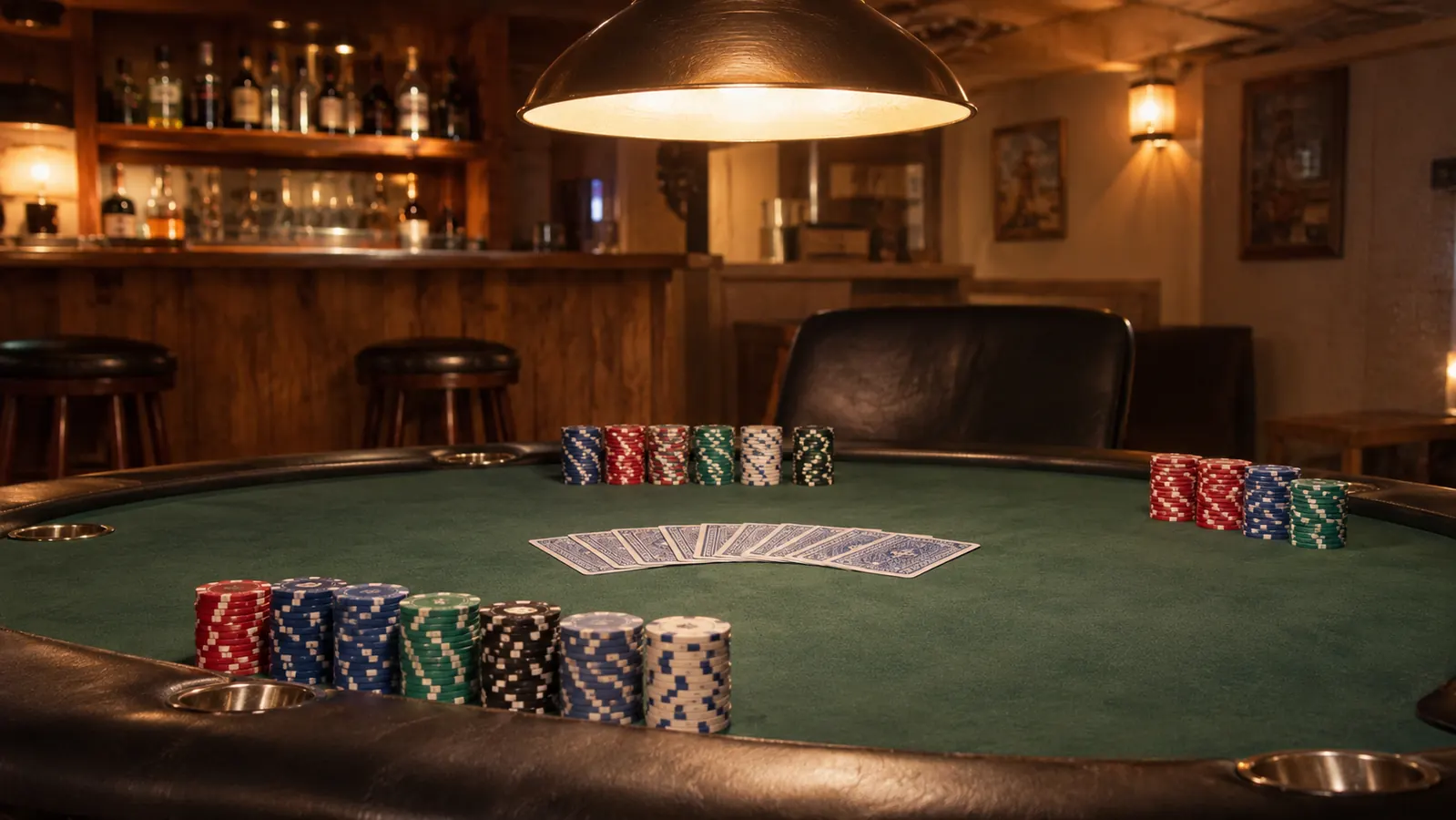
Ray is sixty-eight, and his hands stiffen up when the weather turns. For about a year, every Friday night in my basement had a little pause built into it. The deal would come around to him, he would pick up the deck, riffle it twice, and take his time squaring it back up. Nobody complained. These are friends, not a casino. But by ten o'clock the game was dragging, and I could see him working his knuckles under the lip of the table where he thought nobody was looking.
About five months ago I set a KPAW Automatic Card Shuffler on the felt next to him and told him to press the button. He grumbled, pressed it, and used it the rest of the night. He has not hand-shuffled since. That gave me a decent stretch of Fridays to compare the two, machine against fingers, in the same room, with the same deck.
Short answer: the KPAW shuffler wins on speed, on tired hands, and on getting the same shuffle every single time. Hand shuffling wins on card wear, on table space, and on the fact that your hands never need charging. If your regulars are older, or your deck is big and slick, the machine earns its spot on the felt. If your game is four sharp dealers and a deck you baby, keep doing it by hand. The longer version follows, and I will tell you where I think each one actually wins.
| KPAW Automatic Shuffler | Hand Shuffling | |
|---|---|---|
| Speed per deal | A few seconds from button press to a squared deck | 25 to 35 seconds done properly, longer when hands are stiff |
| Strain on hands | One press. The machine does the gripping | Adds up over four hours, hard on arthritic knuckles |
| Consistency | Same motion on hand thirty as on hand one | Gets lazier as the night goes on, for everybody |
| Card wear | Cards are pulled through a mechanism, and a crooked feed can nick an edge | A clean riffle is the gentlest thing you can do to a plastic deck |
| Table space | Takes a spot on the felt beside the dealer | Nothing on the table but the deck itself |
| Noise | A soft mechanical sound, built to run quieter than other machines | A riffled plastic deck is sharper than people remember |
| Things that can fail | Moving parts, and it needs charging between games | Hands are already attached and never need a cord |
| Cost to start | One piece of gear you buy once and keep on the shelf | Nothing. You already own everything you need |
| Best for | Games with older hands, big decks, and six players who want to keep moving | Small games with deft dealers and cards you want to keep crisp |
Where KPAW Wins
I timed both, because that is how I am built. A proper hand shuffle at our table, by somebody who is not rushing, ran 25 to 35 seconds from picking up the deck to squaring it in front of the next player. We get through 28 to 34 hands on a normal Friday. Call it 30 hands at 30 seconds, and that is 15 minutes a night where the deck is in somebody's hands instead of chips being in the middle. The KPAW does the same job in a handful of seconds. You do not notice the difference in any single hand. You notice it by eleven o'clock.
I did the timing the honest way, with Diane's kitchen timer, over three Fridays in a row back in the spring before the machine went on the shelf. I wrote the number on the back of a score sheet every hand. Some hands ran 22 seconds when Tom had the deal and was moving. Some ran 41 when Ray had it and the weather had turned cold. The average was 29, and the spread is what sold me, not the average. A machine does not have a 41-second hand.
The bigger win is Ray. A plastic deck like the Copag 1546 we play with is slick, and slick cards want a firm, even grip. That is exactly what stiff knuckles do not want to give. Before the machine, he was shuffling maybe a third as fast as the rest of us, and he would apologize for it, which is not what a Friday night is for. Now he presses a button, the machine runs, he cuts and deals like everybody else. Five months in, he deals at midnight as fast as he deals at eight, and that was not true before.
The last thing, and I did not expect to care about it. A machine does the same thing every time. People do not. Our shuffles were decent at eight and sloppy at midnight, which meant the final four or five hands of the night were also the worst shuffled hands of the night. Nobody was doing anything wrong. Tired hands just riffle less. Now hand thirty gets the same shuffle as hand one, and I sleep a little better about the pot on the last hand of the night.
Where Hand Shuffling Wins
A clean riffle is the gentlest thing you can do to a deck. I have said that for years and I still believe it. The machine feeds cards through a mechanism, and if a card goes in slightly off square, it can catch and come out with a small mark near the corner. Five months in, I have found two cards like that across two double-deck sets. Both were cards I fed in a hurry. Square them up, do not jam them, and it has not happened again. But the risk is real and I would be lying if I said it was not.
The first one was a blue seven about three months in, on a night when we were running late and I was trying to hurry the game along. I felt it catch, and I knew. My own fault, and I have been slower about feeding the deck ever since. It cost me one card out of a double deck, and I still have the set in rotation, but it is the kind of thing that does not happen at all when the deck never leaves a pair of hands.
Space is the other thing. The KPAW takes up a spot on the felt next to whoever is dealing. My Trademark Poker folding top has eight seats and cup holders, and at six players there is room, but it is room I used to have for a chip stack. And the machine has moving parts and needs charging between games. Hands do not. If somebody forgets to charge it, or the battery is low, we are back to riffles, which is fine, but that is a difference worth naming out loud.
Fifteen minutes a night is a lot of Fridays
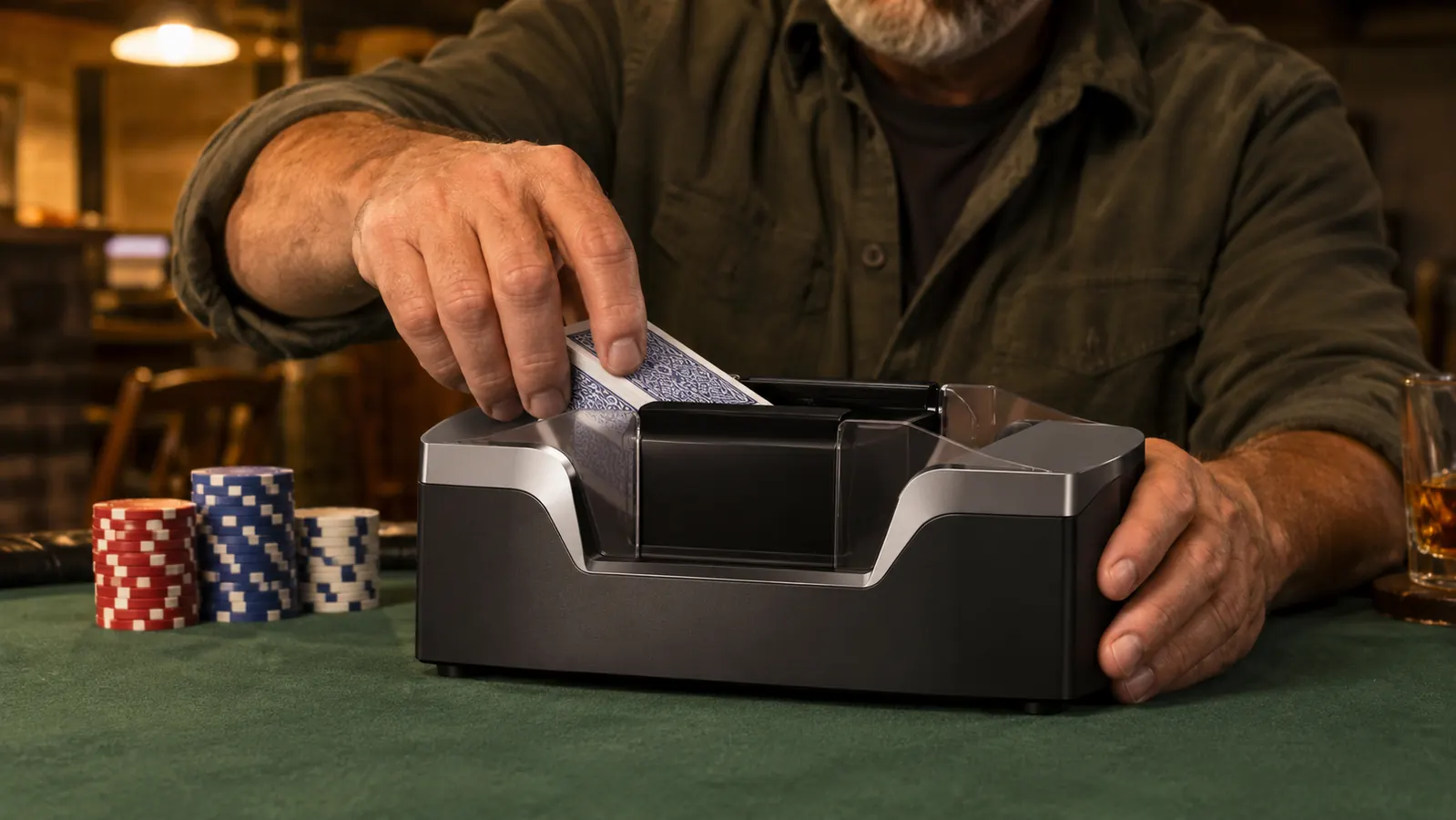
The KPAW Automatic Card Shuffler handles one or two decks, runs on one-press auto or a manual mode, and stays quiet enough that nobody has to raise their voice over it. Five months in my basement and it has not missed a game night yet.
Amazon Check Today's Price on Amazon →Thirty hands a night at thirty seconds a shuffle is fifteen minutes of my Friday that used to go to the deck. Now it goes to the game.
Five Months of Fridays
The machine lives on the shelf behind the bar next to the Fat Cat case, and whoever is dealing pulls it down and sets it beside them. It has become part of the furniture, which is the highest compliment I can give a piece of gear. Nobody talks about it. It gets used thirty times a night and goes back on the shelf. That is the whole relationship, and I like it that way.
I expected it to be loud. It is not. It makes a soft mechanical sound, quieter than a chip stack getting knocked over and quieter than the fridge down the hall. We keep the ball game on the little TV over the bar and nobody has ever had to turn it up. The listing says it is built to run quieter than other machines, and I cannot compare it to other machines, but I can tell you I have sat in rooms with louder ice makers.
One thing that surprised me is that it takes two decks. We run Copag red and blue double decks in rotation, and on the nights we swap colors at the half, both decks go through it one after the other without a fuss. It also has a manual mode, which sounds like a gimmick until you have a player who wants to feel like he is doing something. Ray uses auto. Tom uses manual, because he does not trust anything he did not press twice. Both work, and neither has jammed.

What It Does, and What It Doesn't
To be plain about the hardware, because I have read enough reviews that dance around it. It is a one-press machine. You square the deck, set it in, press the button, it shuffles, you take the deck out. There is a manual mode as well, which lets you run it your own way instead of the automatic cycle. It handles one or two decks. It runs quietly. It weighs 11.2 ounces, so moving it from the shelf to the table is a one-hand job, even with a beer in the other hand.
The footprint is about 20.27 inches by 15.35 by 13.77 if you go by the box, which sounds bigger than the thing feels on the table, because most of that is packing. In the room it is roughly the size of a hardback book lying flat, and it sits beside the dealer's chip stack without crowding him. I measured, because I measure things. It is small enough that nobody has ever asked me to move it.
What it is not: it is not a dealer. It does not cut for you, it does not deal the cards, it does not track a thing. It shuffles. That is the whole job and it does the whole job. I mention it because two people have asked me if it deals for you, and no, it does not, and I would not want it to. Half the pleasure of a home game is watching Tom deal himself into trouble.
Setup is nothing. You take it off the shelf, you set it beside you, you press a button. There is no learning curve and no adjustment I have had to make in five months. My wife Diane, who plays maybe once a month when we are short a player, used it correctly on her first try without being told a thing about it. That is the test I judge gear by these days.
The Card Wear Question
Let me give wear its own section, because it is the one thing that would make me tell somebody to keep shuffling by hand. A machine that pulls cards through has to grip them somewhere. Plastic cards are tough, and my oldest set has survived a dish soap wash and kept playing, so I am not worried about a shuffler wearing out a deck in a season. What I watch for is edge marks. Feed a card in crooked and it can catch. That is a user problem more than a machine problem, but it is a real one.
The fix took me one night to learn. Square the deck before you set it in, do not shove it, and never feed a stack that is already fanned out. Do that and the cards come out the same as they went in. I rotate my two sets every few months anyway, which spreads whatever wear there is across both. Two years on the oldest Copag set and it is still dealing fine, still washing up fine, still sliding across the felt without sticking.
One thing I will say for the hand shuffle, and it is the thing that keeps me from selling the machine to everybody I know. A riffle is a squeeze and a release. A mechanism is a pull. They are not the same force and they do not act on the same part of the card. Over a year, maybe that matters. Over five months it has not, and I will keep an eye on it and say so if that changes.
Who Should Buy Which
Buy the KPAW shuffler if your game has a Ray in it. That is the short version, and the long version is the same thing with more words. Any regular whose hands hurt, or whose grip is going, or who is slow because of it, changes the whole table when they stop being the bottleneck. It also makes sense if you play two decks, if you host six or more, or if your games run past ten o'clock when everybody's riffle gets lazy and nobody wants to admit it.
Keep shuffling by hand if your game is small, your dealers are good, and the cards are the expensive part of your setup. Four people who riffle like they were taught properly will beat a machine on card life and on table space, and they will not miss fifteen minutes that the game was never long enough to spend. Neither answer is wrong. It depends on who is sitting at your table and how their hands feel at eleven o'clock on a Friday.
If your Friday game has a Ray in it, this is the fix
One press, one or two decks, quiet enough to disappear into the background of a home game. It has been on my shelf for five months and it has not cost me a single hand of poker yet.
Amazon Check Today's Price on Amazon →