
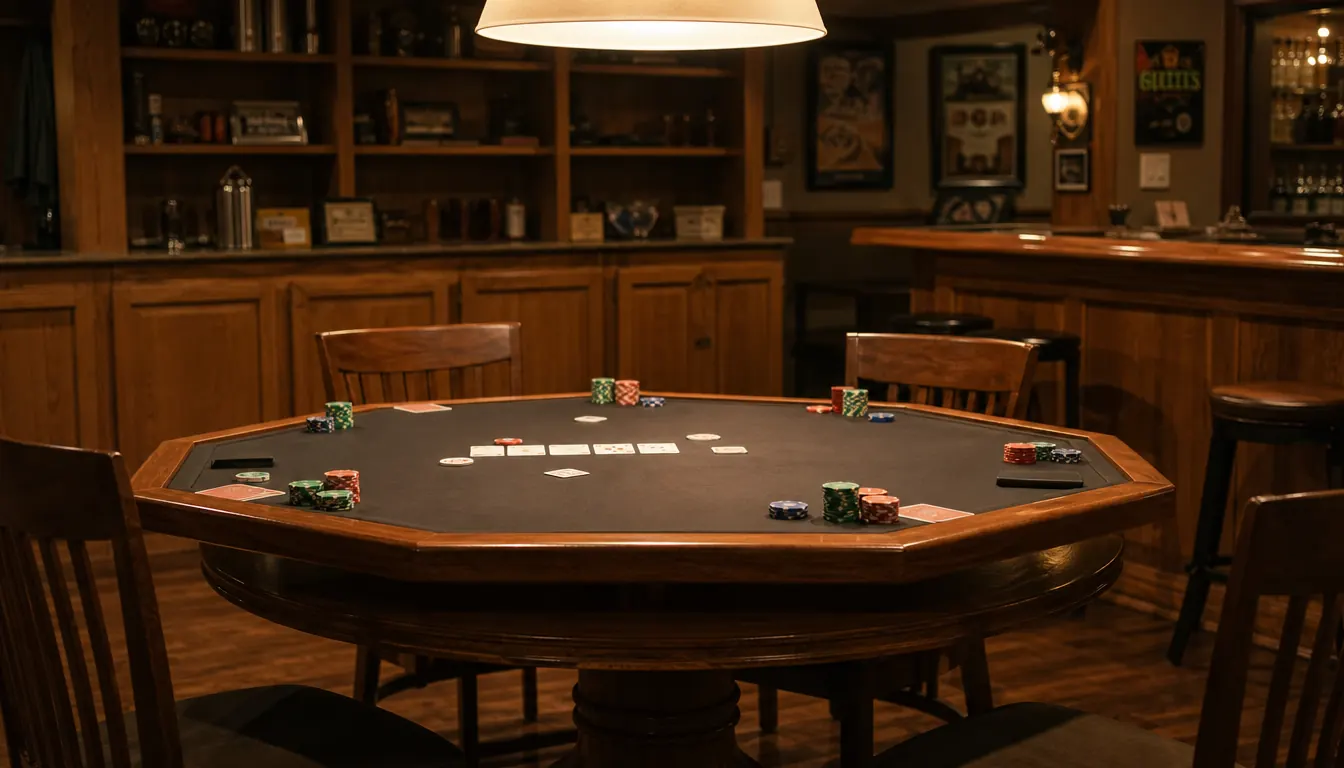
Friday night, six of us around the octagon table in my basement, and the deal comes around to Ray. Ray's hands stiffen up with arthritis, worse in the winter, and the Copag deck has gotten slick enough that a clean shuffle is no longer a sure thing for him. He drops half the deck, apologizes, starts over. Nobody minds. But the game stops dead for two or three minutes every hand, and by ten o'clock we have played a lot fewer hands than we should have.
That is why I bought the KPAW automatic card shuffler about five months ago. Not because I thought it would make anybody at the table a better player. Because it keeps the game moving, and a home game lives or dies on whether it keeps moving. This is a gadget, not a strategy. Here are ten things the KPAW actually changed at my table, in the order I noticed them.
Five months in, it still sits by the dealer's elbow every Friday
One-press auto for the fast hands, manual mode for the quiet ones. Handles one or two decks, and the battery comes in the box.
Amazon Check Today's Price on Amazon →It gives Ray his hands back
Ray shuffles the deck and his fingers do not cooperate the way they used to. He never complained about it, but he was dealing slower every month and quietly passing the deck off when he could. With the machine he presses one button, the deck comes back mixed, and he deals all night like anybody else at the table. That was the whole reason I bought it, and it is still the reason the KPAW stays out on the felt.
It takes the shuffle off the clock
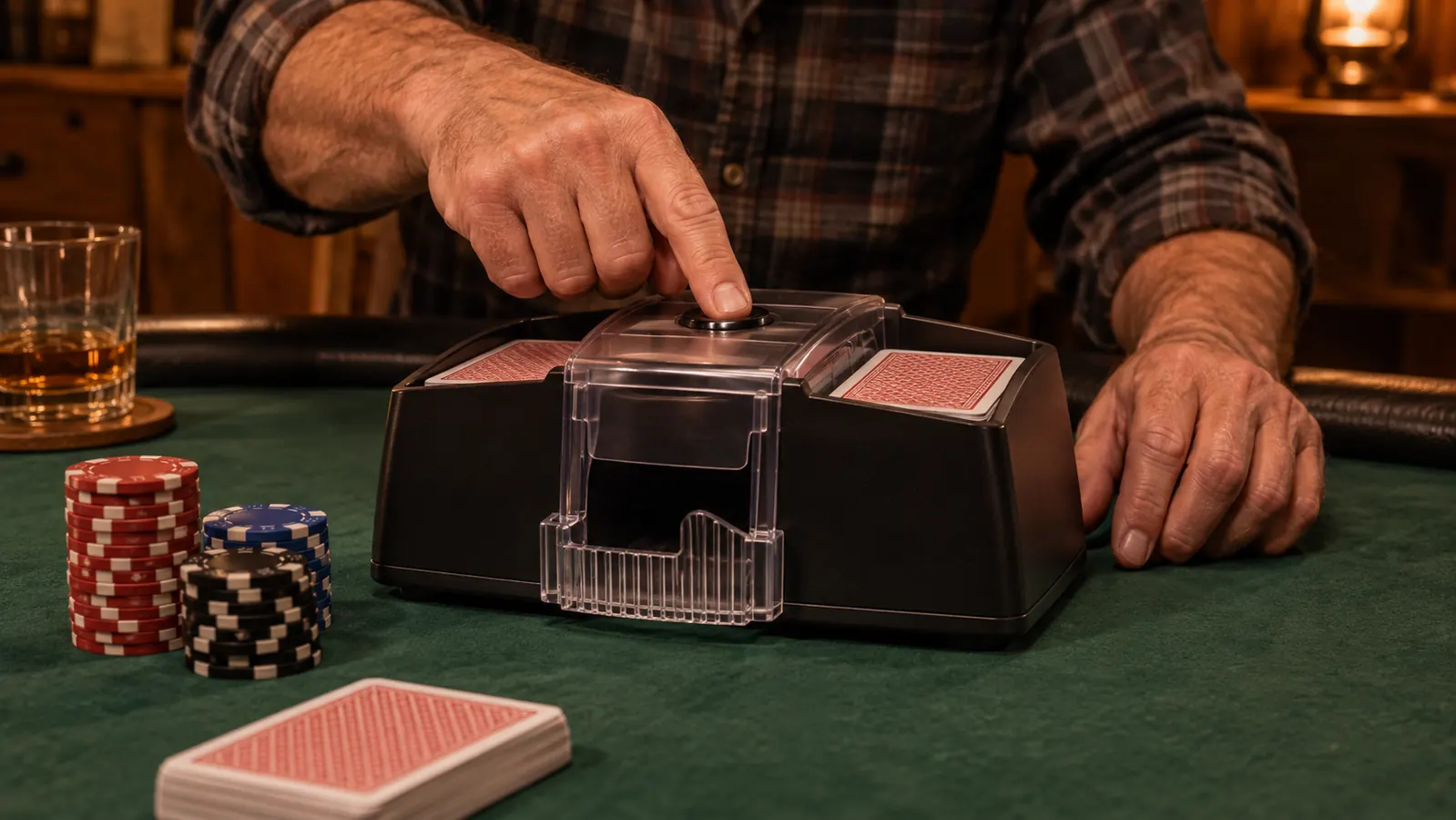
A hand shuffle at my table runs close to three minutes once somebody washes the deck, riffles it, squares it, and somebody else asks for one more cut. Do that forty times in a night and you have burned a chunk of your Friday. The electric one puts a mixed deck back in front of the dealer far quicker than that. I am not going to quote a number of extra hands per hour, because it depends on the crowd, but the KPAW gets us through more of them.
Nobody argues about a bad wash anymore
Home games run on trust, and trust gets thin around midnight when somebody catches a hand they like. We had a stretch where two of the guys were convinced the deck was not getting mixed properly, and there is no good answer to that over a hand-shuffled deck. A machine is neutral. Everybody watches the same cards go in the top and come out the bottom, and the subject simply does not come up at my table now.
Two decks means the game never stops for the deal
The KPAW handles one or two decks, and I run two. One deck is in play, the other is being mixed for the next hand. When the hand ends, the dealer swaps decks and we are off again with no pause at all. Ray and Tom worked that out between themselves inside the first week and now it runs on its own. It is the single biggest reason the night feels faster than it used to.
The noise stays in the basement
The listing says low noise and I was ready to be disappointed, because every gadget claims that. It is quieter than I expected. Diane can watch television upstairs while we play and she has not once come down to ask what that sound is. It is not silent, so do not buy it expecting that. You will hear it working. But it sits under the level of the table talk, and that is the job.
Manual mode for when the table goes quiet
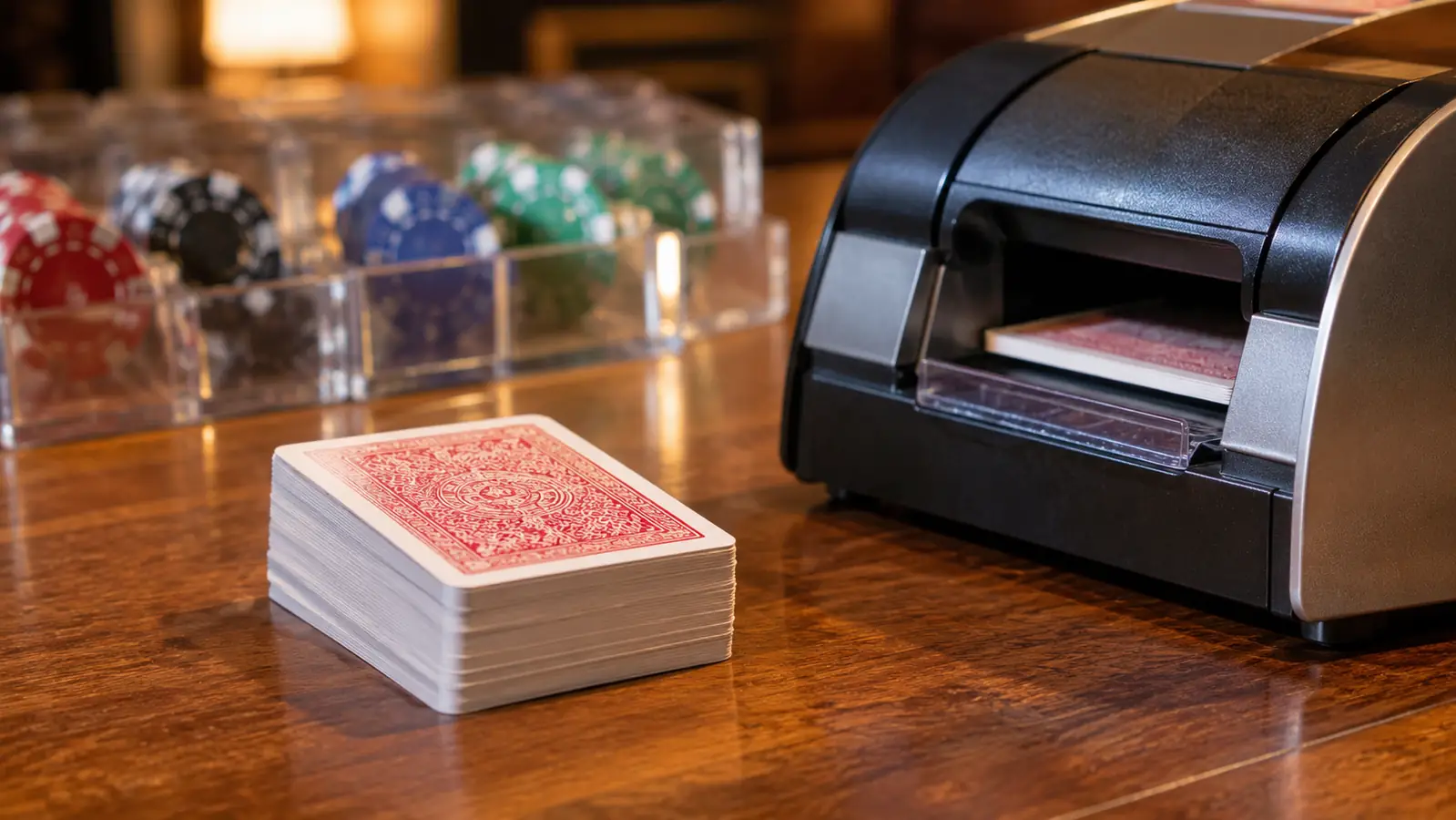
There is a one-press auto mode and a manual mode, and I use both. Auto is what we run almost all night. Manual comes out late, when the table has settled down and somebody is telling a long story, and I do not want a motor cutting across the punchline. Pressing it myself also means I set the pace, which is handy when a hand is still being argued over and the next deal ought to wait.
No cord running across the table
It is rechargeable and the battery comes with it, so there was no trip to the store before I could use the thing. I top it up every few weeks whenever I think about it, and it has never died in the middle of a night. The alternative is a cord from the outlet behind the bar out to the middle of the table, which in a basement with six guys and a couple of beers is asking for trouble.
It is light enough to hand around
About eleven ounces. Ray slides it to whoever is dealing, and it goes around the table with the deal. If it were heavy it would live in one spot and only two fellows would ever touch it, which defeats the point entirely. That sounds like a small thing. It is the difference between a gadget one person uses and a piece of the game everybody uses without thinking about it.
It has not been hard on the cards
We moved to Copag 1546 plastic cards about two years ago after paper decks kept bending and picking up beer. I wondered whether a machine would chew them up. It has not. The oldest set has been through the shuffler for five months, plus a couple of washes with dish soap, and it still squares up and still deals clean. Plastic cards and a machine seem to suit each other. Paper would likely suffer more.
It puts itself away in ten seconds
Small footprint. The KPAW lives in the drawer under the bar with the chip trays and comes out when I set the table up. Nobody has to find shelf space for it or take anything apart. For basement equipment, that is the difference between something you use every week and something you use twice and then forget you own. This one has been out every Friday since February.
Ray has not dropped a deck since February. That is most of the review right there, but I will give you the other nine reasons anyway.
What I'd Skip
If I were buying again I would skip the cheap ones with the two little trays that spill cards unless you seat them exactly right, and I would skip anything that has to be plugged in. I would also tell you not to buy a shuffler expecting it to change the game itself. It does not deal, it does not read the board, and it will not stop Tom from chasing a straight he is never going to hit.
The honest drawbacks of the KPAW: it is not silent, it needs recharging, it is built for one or two decks and nothing past that, and if your group only gets together twice a year it will sit in a drawer and you should save your money. Mine gets used every Friday by six people, so it earns its spot. That is the whole test. How often does the thing come out of the drawer.
The first thing I set out and the last thing I put away
Five months of Fridays, six regulars, one battery that came in the box. If your game has a Ray in it, this is the piece that keeps it moving.
Amazon Check Today's Price on Amazon →