

The first cards I ever put on this table were paper, out of a supermarket two-pack, and they lasted about six weeks. Ray bent an ace of spades in half trying to sneak a look at it, Tom set a beer down on the nine of hearts, and by Thanksgiving the corners looked like a dog had been at them. That was nine years ago, when I started Friday nights in the basement. Paper was just what you bought back then. About two years ago I stopped buying it and started setting out a Copag 1546 double deck instead.
Quick introduction, since you have not heard from me before. I am Gus Pellerin, sixty-three, retired machinist, living outside Toledo with my wife Diane. Most Fridays from October through April there are six of us in the finished basement: my brother-in-law Ray, my neighbor Tom, and three men I worked alongside for close to thirty years. Small stakes, more arguing than money. I judge a deck the way I judged a finished part on the bench, by whether it still holds its tolerances after a couple of years of real use. That is what this is.
The Quick Verdict
Two years and two double-deck sets in, the Copag 1546 is still the deck I set out on Fridays. The jumbo index reads across the table, the plastic stays flat through humid summers, and a wash with dish soap brings a sticky deck back to life. Sharp edges and a loud riffle are the price of admission.
Amazon Check Today's Price →The deck that outlasted every paper set I ever bought
Two decks, one slim hard case, and a plastic stock that takes a wash instead of a funeral. This is the set that has lived on my basement table since the switch.
Amazon Check Today's Price on Amazon →How I've Used It
The Copag 1546 is poker size, three and seven-sixteenths inches by two and a half, which is what my Trademark Poker octagon top was cut for and what feels right in a hand that has done some work. I put a caliper on a card from the oldest deck last month, out of habit more than anything. Two and a half inches across, within a couple thousandths of a fresh one out of the case. No swelling, no curl, no thickness built up at the edge. The set is a double deck in a slim hard plastic case with a divider carrying the Copag mark, fifty-two cards and two jokers per deck, plus a guarantee card. I keep two of those sets in rotation. One sits in the case on the shelf behind the basement bar; the other is on the table.
Two years is the number that matters. The older of my sets has been through something north of eighty game nights, six players a night, and it is still the deck I reach for when the game gets a little more serious. I mark the date on the inside of the case lid with a paint pen when a set goes into service, which is an old habit off the shop floor, and that lid says March of two years ago. The second set handles the overflow nights when somebody brings a cousin and we run two tables, which happens maybe four times a year.
About five months ago Ray's hands started stiffening up with arthritis, so we added a KPAW battery shuffler to the table. That changed how the cards get handled more than I expected. A machine does not riffle like a man does and it does not bend a corner with a thumb the way Ray used to. If anything the plastic decks have taken less wear since the shuffler arrived. Chips still come out of the Fat Cat case, trays still come out of the Brybelly pack, cards still go back into the Copag case at the end of the night.
One practical note on setup. Six players, dealer's choice, and a full deck goes through in about ninety minutes if the game is moving. Having a second deck already shuffled and sitting in the other half of the case means the deal does not stop while somebody counts out fifty-two cards. That alone was worth the switch for me, and it has nothing to do with how the cards feel.
What Two Years of Friday Nights Does to a Plastic Deck
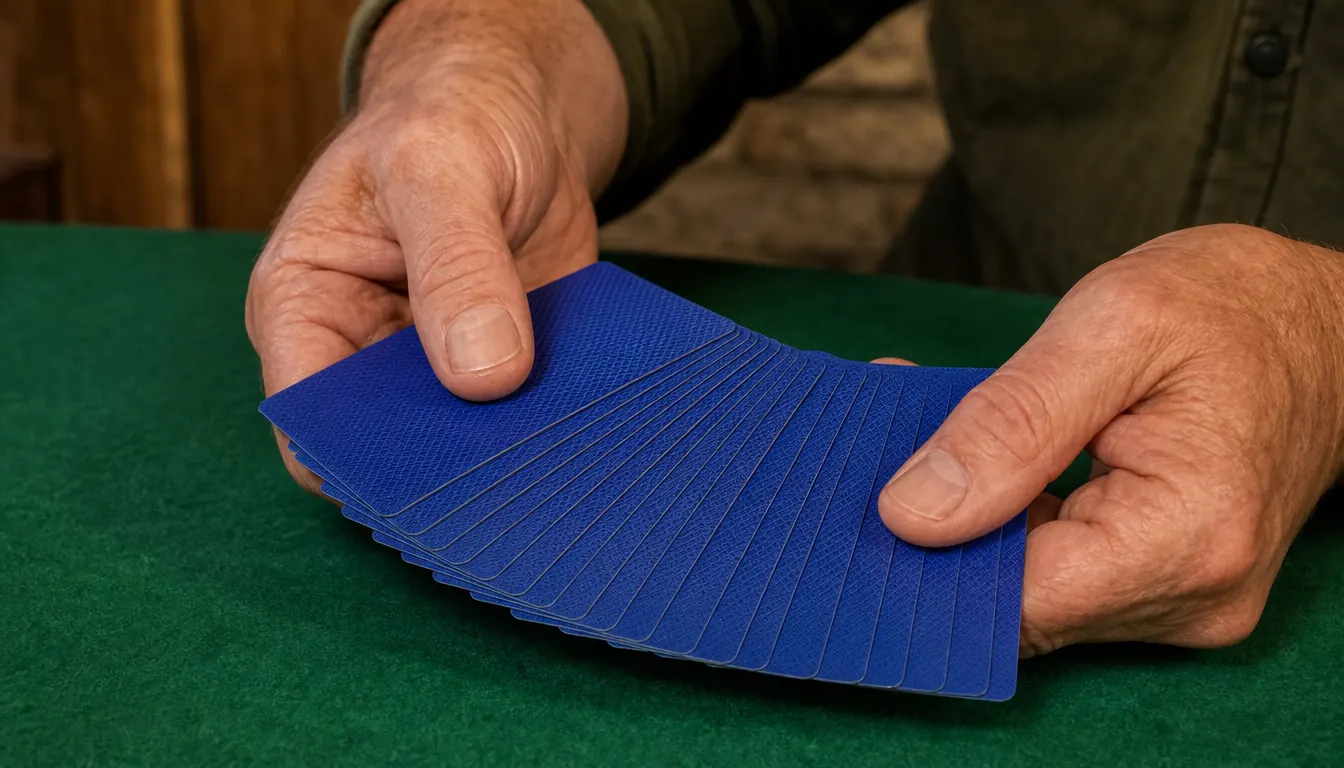
Here is what I expected when I switched: that a plastic deck would eventually crack, or delaminate at the edge, or peel at the corner like a cheap countertop. None of that has happened. What has happened is scuffing, mostly across the face of the cards where a thumb slides when you fan them out. On the two-year-old deck you can see it if you hold the cards under the bar light and go looking. In play nobody notices, including me, and I am the one who looks. Tom knocked a full glass of Coke onto one of the decks about eighteen months back. We wiped them, I washed that deck the same night, and there is no stain, no ripple, nothing you could point to.
The thing that actually sold me was flatness. Paper cards in a basement, and mine is finished but it still gets damp in July, tend to take a bow. You end up with a stack that curls at the edges, and every shuffle turns into a wrestling match. The Copag decks have not bowed. Not the two-year-old set, not the set that has been washed three times. The worst stretch was July before last, two solid weeks of rain and a basement that felt like a sponge. I pulled both decks out of the case on the Friday expecting the worst and they came out flat as a gauge block. They live flat in the case and they come out flat, through two full summers of walleye season when the game drops to every other week.
One more thing I did not expect: the corners hold. On a paper deck the corner is the first thing to go because the corner is a fold. Plastic is one piece of material, so there is no fold to fail. Two years in, the corners on the oldest deck are still square enough that you cannot pick out one card from another by feel alone.
The Jumbo Index, and Why It Matters More at Sixty-Three
This set is jumbo index, which means the rank and suit are printed large enough to read from the far end of the table. At forty I would have told you that did not matter. At sixty-three, with three other men past sixty and a couple of younger fellows, it matters. Tom sits opposite me and can read his hole cards without lifting them off the felt. Ray, whose eyes are worse than mine, no longer holds them out at arm's length like a man reading a menu without his glasses.
The tradeoff is real, so I will name it. A jumbo index covers more of the card face than a standard index, so the artwork on a face card gets partly crowded. If you like a traditional look, the standard index version of this same 1546 is the one to get, and Copag makes both. For a home game where half the table is drawing Social Security, I would take the jumbo every single time and not think about it again.
Twenty-six months, north of eighty game nights, three washes with dish soap and warm water. The deck is still flat, the corners are still square, and it is still the one I set out on Friday.
The Case, the Washing, and the Small Annoyances
The case is a hard plastic box, slim, with a divider down the middle carrying the Copag symbol. One deck on each side. It does what a case is supposed to do, which is sit on a shelf behind a bar for two years and keep the cards out of the dust and the sawdust that somehow follows a retired machinist home. The divider is the part I like best. Two decks in one box with a wall between them means the decks do not get shuffled into each other, which happened to me constantly back when decks were rubber banded.
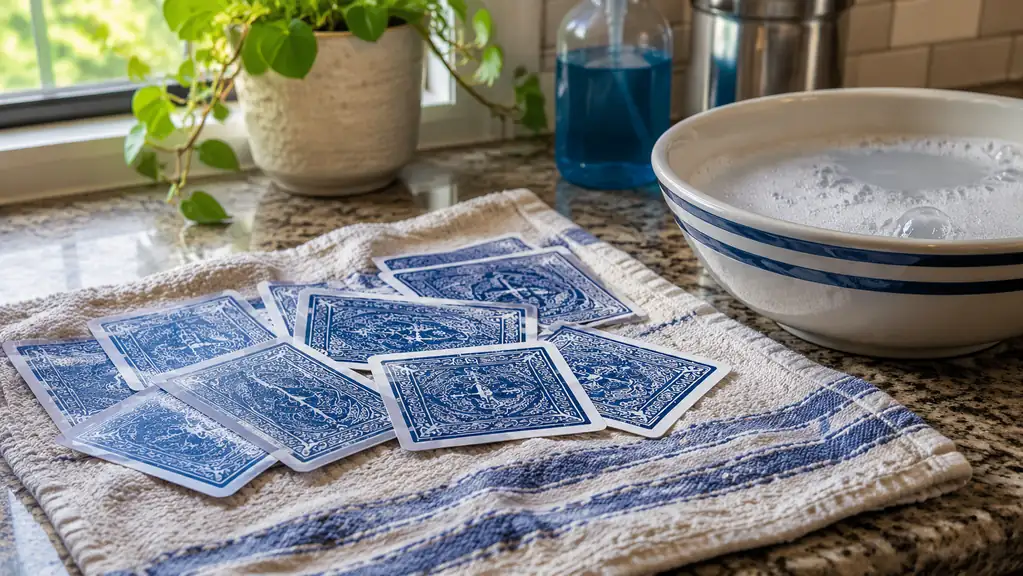
Washing is the part new buyers underestimate. Plastic cards get handled with whatever is on your hands, and at my table that is beer, pretzels, and occasionally the grease off a plate of wings. Paper absorbs that and it is finished. Plastic does not absorb it, so you can wash it. My method has not changed in two years: a stainless mixing bowl, lukewarm water, one drop of dish soap, swirl the deck around for about a minute, rinse them under the tap, then lay them face down on a dish towel on the kitchen counter and leave them until morning. The oldest set has been through that at least three times and it is still in play. The first time I did it I stood there expecting the print to lift off. It did not, and Diane told me to stop hovering over them.
The annoyances are small but I will list them. New cards are slick, and a slick deck will slide off the stack when you cut it for the first few nights. The edges out of the box are sharp enough that a hard riffle stings the web of your hand, which is the best argument for a shuffler if you have one. The latch on the case is plastic, so do not drop it off the bar onto concrete. Mine has held up, but it is the part I expect to fail first.
How They Compare to the Paper Decks We Used to Buy
Before these I bought paper decks by the brick. Cheap, and I told myself it did not matter because cards are cards. It mattered. A paper deck in a basement with six men and drinks on the table was good for maybe six to ten nights before the corners went soft and the whole thing started to feel like a stack of napkins. I kept a rough tally for the first few years, out of curiosity more than thrift. Call it four paper decks a year at six to ten nights each, which puts somewhere north of thirty decks in the trash before I ever switched.
The plastic costs more going in. I will not pretend otherwise. What I will say is that I have bought exactly two of these double-deck sets in two years, and the second one was for the overflow table, not because the first one wore out. If you want the longer version of that arithmetic, I laid it out in my notes on plastic cards against paper cards, and the short form is that paper never really was cheaper once you count how often you replace it.
The other thing paper did was advertise itself. A paper deck that has been played hard gets soft corners and a worn spot in the middle, and after a few months you can tell one card from another from the back. I never worried about anybody cheating at my own table, but I did get tired of knowing which card was which by feel. The plastic deck two years in does not give you that.
What I Liked
- Jumbo index is readable from the far end of the table
- 100 percent plastic stock stays flat through humid basement summers
- Washable with dish soap and warm water; the oldest deck has been washed three times
- Corners stay square because there is no fold to fail
- Double-deck set with a divider in a slim hard case
Where It Falls Short
- Edges are sharp out of the box and sting on a hard riffle
- Slick for the first few nights and slides when you cut
- Louder riffle than paper, and it carries upstairs
- Plastic case latch is the weak point
- Costs more going in than a brick of paper decks
Who This Is For
This is for the person who hosts. If you have a table in a basement or a garage, if the same six or eight people show up most weeks, and if you are the one who buys the cards and puts them away at the end, the Copag 1546 earns its place the boring way good tools do. It is also for a group that has gotten older, because the jumbo index quietly solves a problem nobody wants to bring up out loud.
It suits dealer's choice nights, too. One set covers a fast game and a slow one without the cards going soft halfway through, and having two decks in one case means one can be in play while the other is shuffled and waiting. If you are upgrading a table piece by piece the way I did, chips first, then the top, then the cards, this is a sensible last step. It is the part of the setup your hands touch most.
Who Should Skip It
Skip it if you play once a year at a cabin and the cards live in a drawer the rest of the time. Paper is fine for that and it costs less. Skip it if you like a broken-in deck with a little bow in it, because these will not give you that. And skip it if you want a soft, flexible card. Plastic is stiff and takes about a night to get used to if you have only ever shuffled paper.
One honest note before you buy: a plastic deck is not quiet. It clicks when you riffle, louder than paper, and Diane has mentioned hearing it from upstairs. Some people love that sound at a poker table. If you need a silent deck, this is not it.
Two years of Fridays and the corners are still square
Jumbo index, 100 percent plastic, washable, and it comes in a hard case with a divider keeping the decks apart. Same set I have been laying out since the switch.
Amazon Check Today's Price on Amazon →