

Nine years of hosting a Friday night game in my basement has taught me one thing about cards: the deck is the first thing to go. Paper decks would last me maybe six weeks. A corner would soften, a crease would show up in the middle of the deck, and pretty soon you could feel where the ace of hearts was without looking. I switched to Copag 1546 plastic cards about two years ago and I have not bought a paper deck since. Here is why plastic lasts, in the order it actually matters at the table.
Quick context so you know where I am coming from. Six players, small stakes, nobody playing for a living. I am 63, a retired machinist, and I care about how a thing is built. A card deck is a manufactured object. Plastic and paper are built differently, and that difference shows up night after night.
My oldest set has been washed with dish soap and it is still in play
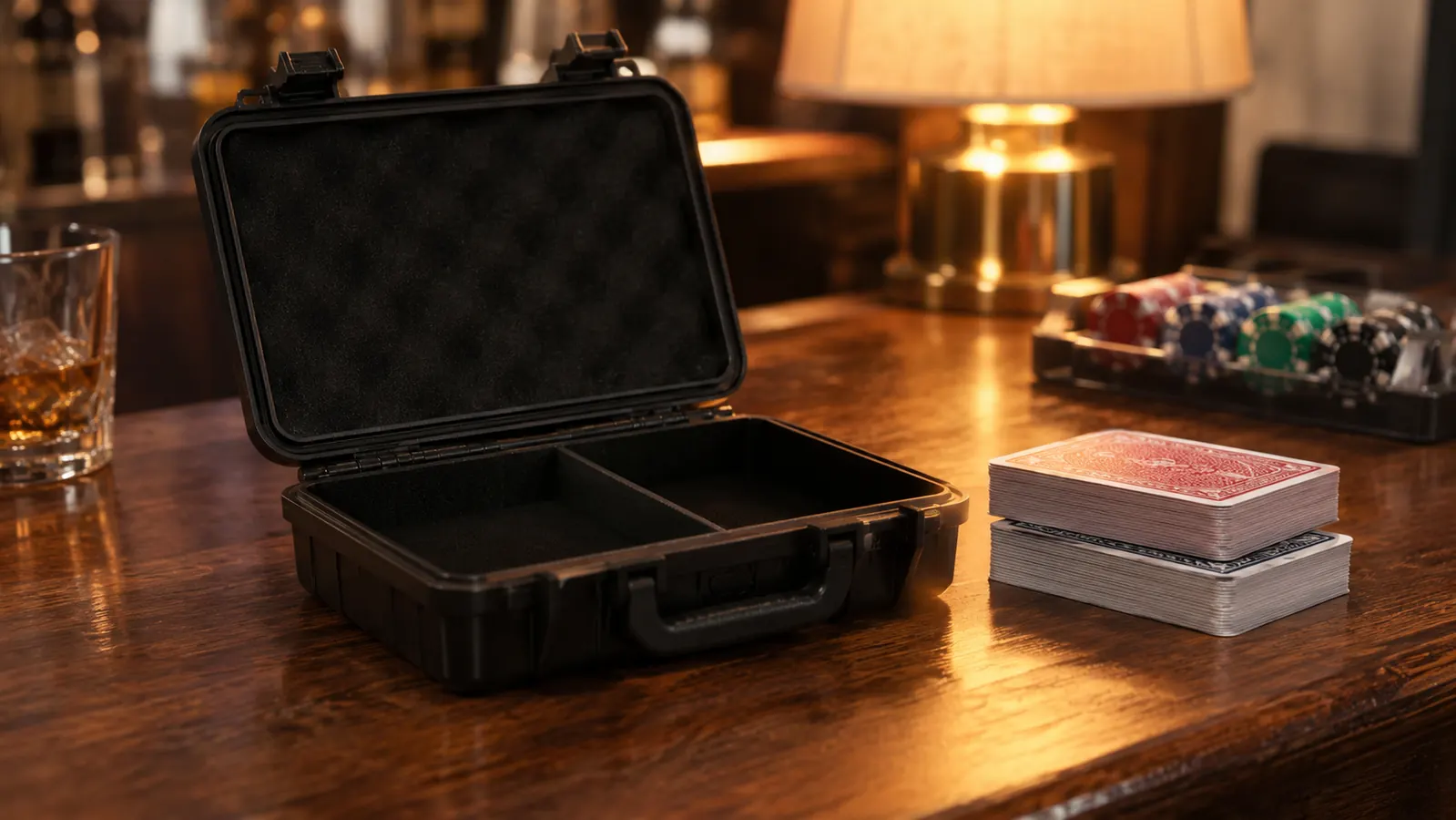
Two years of Friday nights, six players, one double-deck set. It comes in a hard plastic case with a divider, and the case slides onto a shelf.
Amazon Check Today's Price on Amazon →Plastic Does Not Crease Where You Grip It
A paper deck fails in the same spot every time. It is the place your thumb sits when you square the deck, and after a few hundred hands the fiber there breaks down and folds. Once that crease sets, you can cut the deck and find the card by feel, which is not a good thing at a friendly table because everybody starts wondering. PVC has no fibers to break. The Copag 1546 decks are 100% plastic PVC, and after two years of Fridays the deck still squares up flat when I set it down.
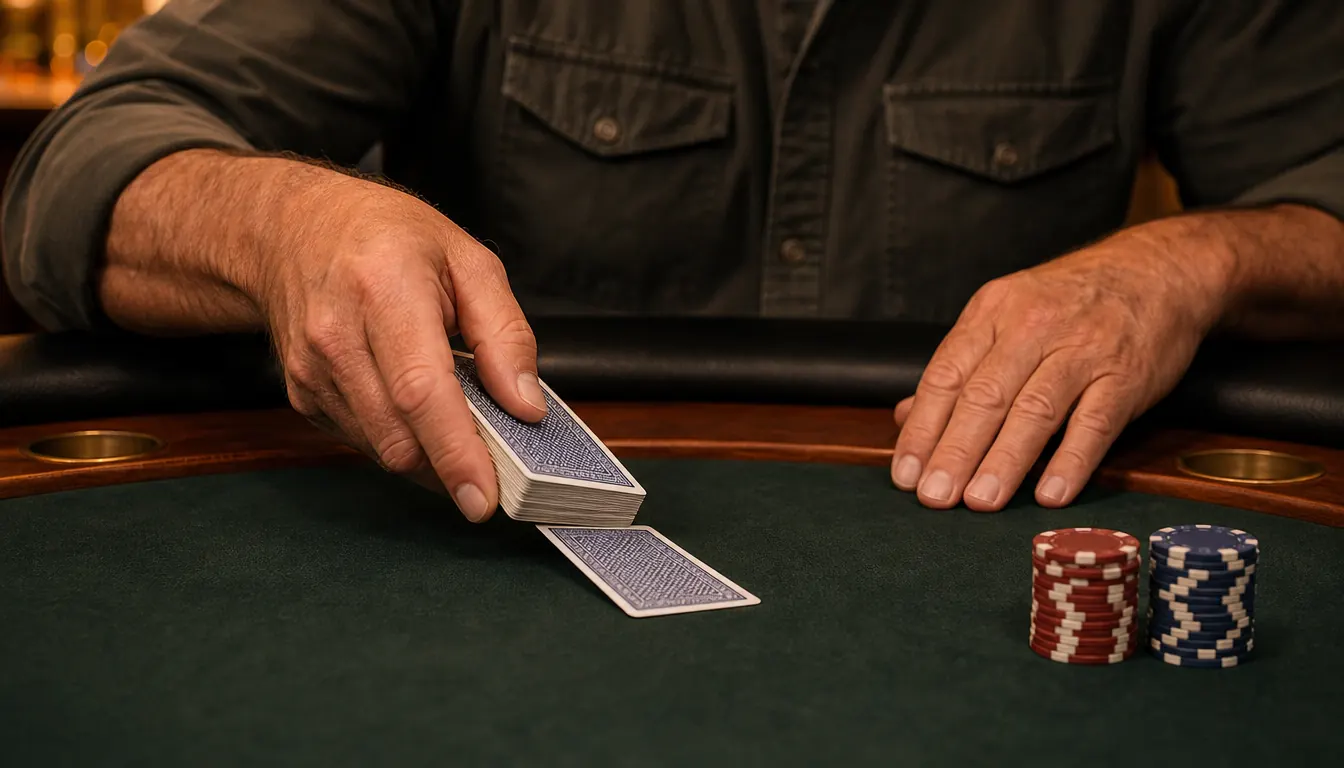
A Spill Wipes Off Instead of Soaking In
Somebody knocks over a glass about once a month at my table. With paper, the damage is done before you get a towel. The card wicks liquid into the paper core, it swells, and it never goes back. With plastic, you wipe it, you fan the deck out to dry, and you keep playing. I have had a whole bottle of water go over on a plastic deck, and the only cost was a five minute break and a dry bar towel. That is a small thing until it happens to the deck you just opened.
You Can Wash Them With Dish Soap
This is the one that sold my brother-in-law Ray. Paper cards cannot be cleaned. They can only be replaced. Plastic cards can go in the sink with warm water and a drop of dish soap, get patted dry on a towel, and go back in the case. My oldest set of Copag cards has been washed, and it is still in the rotation on Friday. Nine years of hosting, and no paper deck I ever owned survived a cleaning. They came out of the wash soft and finished.
The Corners Stay Square Instead of Furring Up
Paper decks die at the corners first. The layers start to separate, the corner goes fuzzy, and the whole deck starts to feel like it was cut with a dull blade. You will find yourself squaring the deck every hand just to keep it tidy. Plastic corners do not delaminate because there are no layers to separate. Two years in, the corners on my working set still look like corners. That matters more than people think, because a deck that will not square makes every shuffle slower.
They Snap Back Flat After a Bridge or a Shuffle
Paper takes a set. Bend a paper deck into a bridge a few hundred times and it starts to remember the shape. Then it does not sit flat on the table and it does not riffle cleanly. Plastic has memory in the other direction. Bend it, let go, and it returns to flat. The deck I use most has been riffled and bridged on every hand for two years and it still lies dead flat on the felt. That is the difference between a deck that wears out and a deck that wears in.
The Index Stays Readable After Two Years of Thumbing
Jumbo index is the style I buy, and it is a real help at a table where two of the six players are past sixty and the lamp is not what it was. The worry with any index is wear, since you are dragging a thumb across that corner on every peek. The numbers and suits on my oldest set are still sharp. No fading, no rubbed edges, no white spot where the rank used to be. I cannot tell you the printing process, but I can tell you the result after roughly a hundred game nights.
One Double-Deck Set Replaces a Drawer of Paper Decks
A paper deck used to last me about six weeks before it went soft. Over nine years that is a drawer full of dead decks, and I am not exaggerating. The Copag double-deck set gives me two full decks, 52 cards and 2 jokers in each, so one deck plays while the other sits. Two double-deck sets in rotation cover a whole year of Friday nights. The math is not close. I stopped thinking about cards as something to buy and started thinking of them as equipment that lives in the basement.
The Hard Case Protects Them Between Games
Cards tossed loose into a drawer get beaten up whether they are paper or plastic. The set comes in a durable hard plastic case with a divider carrying the Copag symbol, and the case is slim enough that it slides onto a shelf. Mine lives on the shelf behind the basement bar, next to the chip case. Between games the cards are not touching anything that can nick an edge. That is a plain, unglamorous thing that adds years, and it is the sort of detail I notice as a retired machinist.
They Feed Through a Shuffler Without Catching
We added a KPAW automatic shuffler about five months ago because Ray's hands stiffen up with arthritis and hand shuffling was slowing the game down. A shuffler is hard on cards. It grips and pulls, and paper decks come out of one with bent corners within a couple of weeks. The plastic decks go through clean, deck after deck, and come out flat. If you already use a shuffler, this is the argument that ends the paper versus plastic question for you. Fewer misfeeds, fewer jams, less swearing.
Two Years In, I Have Not Bought Another Deck
That is the whole argument, really. I switched to Copag plastic cards about two years ago after paper decks kept bending and picking up beer. Since then I have bought chips, a table top, chip trays, and a shuffler. I have not bought cards. The oldest set has been washed, dropped, spilled on, and dealt a few thousand hands, and it is still the deck I reach for on a Friday. When a thing stops being a consumable and becomes part of the room, you know it was built right.
What I'd Skip
Two things I would skip. First, anything sold as plastic coated. That is a paper card with a thin film on it, and the film wears through at the corners in a few weeks, which puts you right back where you started. Look for 100% plastic, which is what the Copag decks are. Second, I would skip the fancy collector decks for a working game. They are lovely to look at and I would not deal them into a pot with a beer sitting on the bar. One honest warning about plastic: a brand new plastic deck is slicker than paper and it will slide off the table for the first few nights until it settles. That is a real tradeoff and I would rather you hear it from me.
My oldest Copag set has been washed with dish soap, dried on a bar towel, and dealt back into the rotation the next Friday.
The deck that made it through two years of Fridays
100% plastic PVC, poker size, jumbo index, double-deck set in a hard case with a divider. Mine sit on the shelf behind the bar and go back on the table every week.
Amazon Check Today's Price on Amazon →