
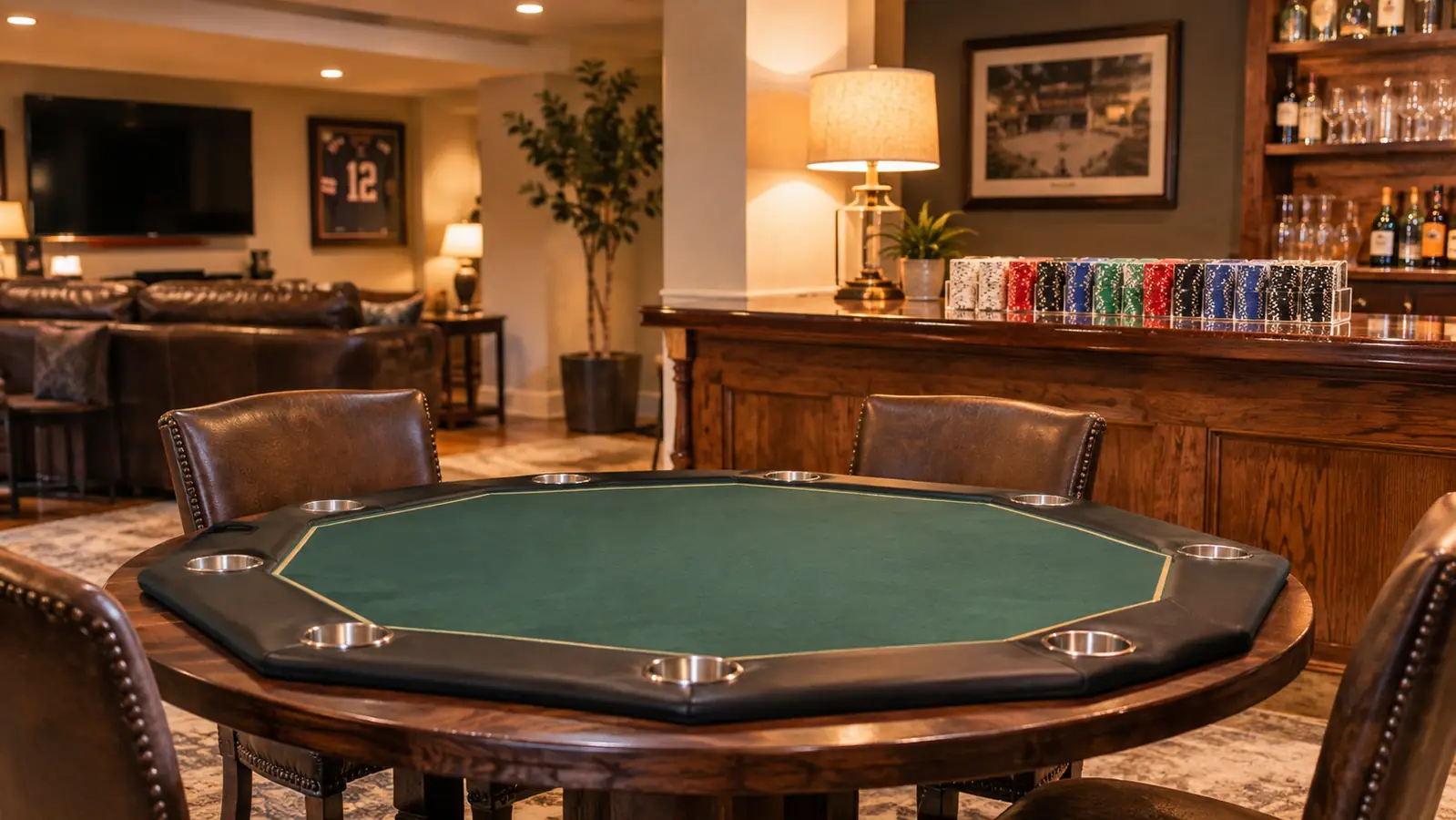
Nine years of running a Friday night game in my basement has taught me that the chips are rarely the problem. The heap is the problem. You open the case, six people reach in at once, and by the second hand you have five denominations blended into one pile and a white chip that rolled under the bar and will not be seen again until spring. I tried baggies. I tried a muffin tin, which my wife Diane still brings up at family dinners. What finally worked was boring: trays, one denomination per tray, loaded the same way every week.
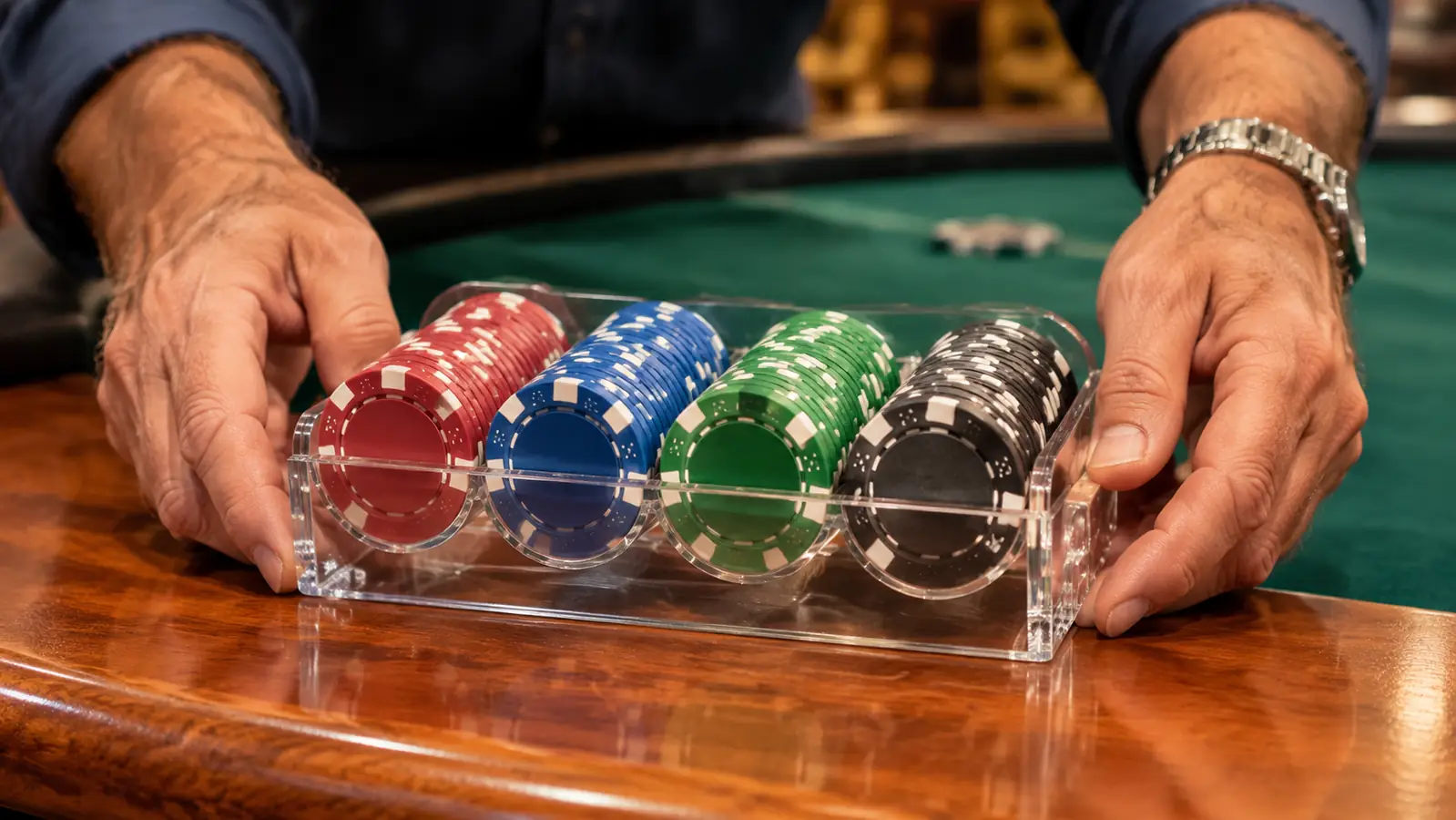
About a year ago I bought a pack of ten Brybelly acrylic chip trays. That is ten trays, each rated for up to 100 chips, which is more capacity than my whole set needs. They are acrylic and see-through, so I can look at the bank from across the room and know whether I am light on fives without walking over to count. The whole pack weighs 1.7 pounds, and the trays nest and stack without eating shelf space. The chips are not included, which is fine, because you already have chips. What you do not have is a place to put them.
Ten trays, a hundred chips apiece, and setup stops eating your evening
Each tray measures 7.825 by 2.7 by 0.625 inches and holds up to 100 standard or clay chips. The pack of ten covers a full 500-chip set with spares left over. Chips sold separately.
Amazon Check Today's Price on Amazon →Before You Start: Three Things You Actually Need
You need a chip set you are willing to count, a flat surface bigger than the poker table, and a tray for every denomination plus a couple to spare. That is the list. I do my sorting on the wood bar instead of the table because the bar has a lip at the back, and a chip that gets away from you stops against that lip instead of dropping onto the carpet and rolling into the furnace room.
Give yourself twenty minutes the first time through. After the first sort, the whole job is five minutes of loading trays, and it happens before anybody rings the doorbell. The first Friday after I set this up, I was finished before the coffee brewed and I sat down wondering what I had forgotten.
Skip the alternatives I tried first. Baggies split at the seams. A plastic organizer from the hardware store cracked in the cold of the basement inside one season. The trays cause less grief because each one is a single piece of acrylic with no hinge, no lid and no latch to break, and they stack flat on a shelf.
How Many Trays a Six-Player Game Really Uses
Ten trays is more than one game needs, and that is the reason to buy the pack. Here is the arithmetic I run. My set is 500 chips. Two trays get loaded to the top at a hundred apiece, and those two are the bank. That accounts for 200 chips. The other 300 go out as six starting stacks of fifty, one tray per seat, which uses six more trays. Two trays are left over and they live inside the case.
The math scales both ways. A tray holds up to 100 chips, so a thousand chips fit across ten trays and a bigger game with deeper stacks is covered by a second pack. A smaller game still wants two full bank trays, because the slowest part of any Friday night is somebody digging through a pile for change when the cards are already out.
Step 1: Count and Separate by Denomination
Dump the whole set out and sort it by colour into five piles. Do not trust the number printed on the box. My Fat Cat 500-chip Claytec set is three years old and has been through a lot of Fridays, and the first time I counted it I came up four chips short of the label. Two turned up in the case lining. One was in a cupholder of the folding table top. I never found the fourth and I stopped worrying about it.
Use the trays themselves as sorting bins while you work. Push each finished pile into its own tray as you go. It keeps the bar clear, it stops the piles from spreading into each other, and it means you are already partway through the loading job before the sorting is done.
Write the final count down and tape it inside the lid of your case. Mine reads white 100, red 100, blue 100, green 100, black 96, plus a note about the cupholder. One minute of writing settles every later argument about whether the bank has come up short.
Step 2: Pick a Denomination Order and Never Change It
Pick an order and commit to it. Mine is white for one, red for five, blue for ten, green for twenty-five, black for one hundred. That order runs left to right in the case, left to right on the bar, and left to right in front of every player. The point is not that my order beats yours. The point is that it never changes, so nobody has to think about it at eleven at night.
I keep a strip of masking tape inside the case lid with the order written on it in marker. Ray, my brother-in-law, has read that tape a couple hundred times and still asks which colour is the ten. Fine. The tape answers him faster than I can.
Once the order is set, loading a tray becomes something your hands can do without your eyes. That is the entire goal here, and it is why setup now takes me about as long as it takes the coffee to brew.
Step 3: Load the Bank Trays to the Full Hundred
Brybelly rates each tray at up to 100 chips. I load both bank trays right to the top, and a tray takes a full hundred when the chips are sitting square. The tray measures 7.825 inches long, 2.7 inches wide and 0.625 inches deep, so a properly loaded tray sits flush at the rim with no chip standing proud. Load at an angle and you will fit fewer, and the tray will not sit flat.
Flat matters more than you would expect, because these trays stack. A tray riding high on one corner rocks the stack above it. When I carry two loaded trays from the bar over to the table, I want them locked together, not shifting against each other.
Load the high denominations first if you are short on time. The blacks and greens get reached for least, so they are the ones you least want to be digging for at the bottom of a loose pile.
The first Friday with the trays loaded, setup went from half an hour of sorting to five minutes of setting trays on the bar.
Step 4: Park the Bank on the Bar and Leave It There
Two loaded trays stay out on the bar between games. That is the bank, and it does not get packed away. One tray carries the working denominations people buy in with. The other carries the blacks and greens for a night that runs long.
Keeping the bank loaded means Friday setup is a two-minute job. I set the two bank trays on the bar, put the folding octagon top on the old round table, and get the cards out of the drawer. The Copag decks come out, the shuffler goes next to whoever is dealing, and Ray sits down and asks about the ten.
The see-through acrylic earns its keep here. I can glance at the bank from across the room and know whether I need to break into the other tray. No counting, no lifting, no walking around the table.
When somebody buys in, I lift a stack out of the working tray and set it in front of him. No counting it out chip by chip while five other people sit and wait. That alone was worth the change.
Step 5: Set Up Six Starting Stacks and Store the Spares
Before anyone arrives I count out six starting stacks into six trays, fifty chips each, same mix of denominations at every seat. No discussion at the table, and nobody feeling short because his stack sat a quarter inch lower than the guy next to him.
Handing out starting stacks from trays is the part I did not expect to like. I put one in front of each seat and the chips arrive in one piece. Most players dump theirs out by the second hand, which is fine. The tray already did its job.
The two spare trays live in the gap inside the Fat Cat case, above the chip rows and under the lid. They do not rattle and they do not take shelf space I do not have. Keep the spares with the chips, or you will be hunting for them on the one night you actually need an eighth tray.
The colour-up at the end of the night is the other place trays pay off. Players push their small chips back toward the bar, I drop them into the working tray, and the bank resets in about a minute. Nothing goes back into the case out of order, so next Friday starts where this one left off.

What Else Helps
Keep the chips dry. Clay chips and moisture do not get along, and an acrylic tray will hold a spill against the chips instead of letting it drain away. If a drink goes over, empty the tray, wipe every chip, and let both air dry before you reload. I lost four chips to a spilled beer in year two and I have been careful since.
Do not stack loaded trays more than three high. They will take it, but the bottom tray carries the whole load and acrylic will bow over a season or two. Three is plenty for me, since my entire set fits in eight trays with two spares.
Wash the trays once a year with warm water and a drop of dish soap, rinse them, and dry them completely before the chips go back in. They pick up a film from hands and felt over a winter. Five minutes of work and they come back looking like new. Skip the dishwasher, because heat and acrylic are not friends.
A year in, my Brybelly trays have no cracks at the corners and no cloudiness, which is more than I can say for the plastic bins I tried before them. Ten pieces of acrylic have outlasted everything else I used to keep chips in.
Keep the trays in the same rotation as the rest of your gear. Cards get swapped out, buttons get wiped, trays get checked for cracks. I do all of it on one Sunday in spring and it takes half an hour, and small habits like that are why the game still runs after nine years.
Keep the whole setup in one place. My case, my trays, my cards and my two dealer buttons all live on the same shelf behind the bar. Nothing gets borrowed for a camping trip and nothing goes missing. The game runs weekly from October through May and every other week in summer when the walleye are running on Erie, and that one habit is the reason I have never set up my own game short a tray.
The simplest fix for the pile on your table is a stack of trays
Pack of ten Brybelly acrylic chip trays, up to 100 chips each, sized for standard size chips and clay chips. Chips are not included. Load them once and Friday setup stops being a chore.
Amazon Check Today's Price on Amazon →